Almost everyone new to trading spends their energy on the same question: what should I buy, and when? Entries feel like the whole game. But ask traders who’ve lasted a decade what actually kept them in business, and you’ll hear something quieter and less exciting — crypto risk management, and the discipline to respect it. This page is the map of how Pineva approaches both. It’s the least glamorous part of trading and, by a wide margin, the most important.
You can’t control returns — only risk
Here’s the uncomfortable truth the whole discipline rests on: you do not control what the market gives you. You can have a great read and still lose; you can be sloppy and still win. What you do control, completely, is how much you’re willing to lose on any single trade, where you’ll exit, and whether you follow your own plan. Risk is the one part of trading that answers to you. So it’s the part worth mastering first — not because it maximizes wins, but because it keeps you at the table long enough for a good process to matter.
This is also why Pineva doesn’t sell signals or promise returns: nobody honest can. What can be built is a way of managing the one thing you actually govern.
The four questions every trade must answer
Before you risk a single dollar, a complete trade answers four questions. Each is a discipline in its own right, and each has a deeper guide:
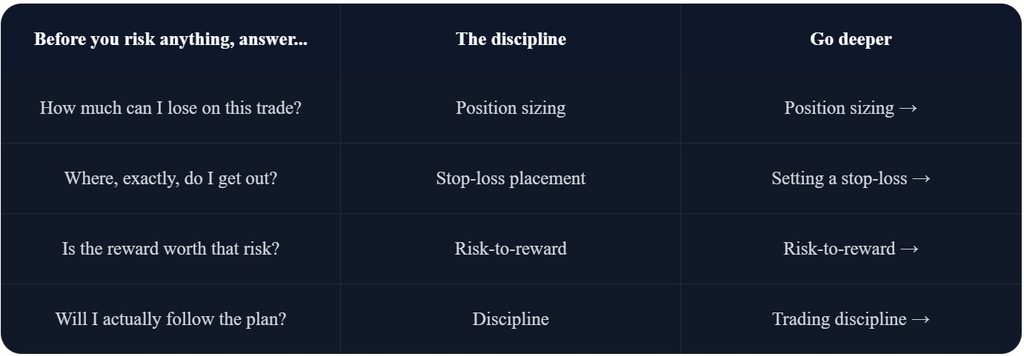
Miss any one of the four and the other three can’t save you. A perfectly sized position with no exit is still a time bomb; a great risk-to-reward you abandon under pressure was never really yours.
How much can I lose? (Position sizing)
Position sizing is the quiet decision that determines whether a losing streak is a bruise or a catastrophe. The idea is simple: risk only a small, fixed fraction of your account on any one trade, so no single loss — or even a run of them — can take you out. Get this right and everything else has room to work; get it wrong and no entry, however good, will save you. It’s the first thing we’d point a new trader to, and we cover it in full in Position sizing →.
Where do I get out? (Stop-loss and invalidation)
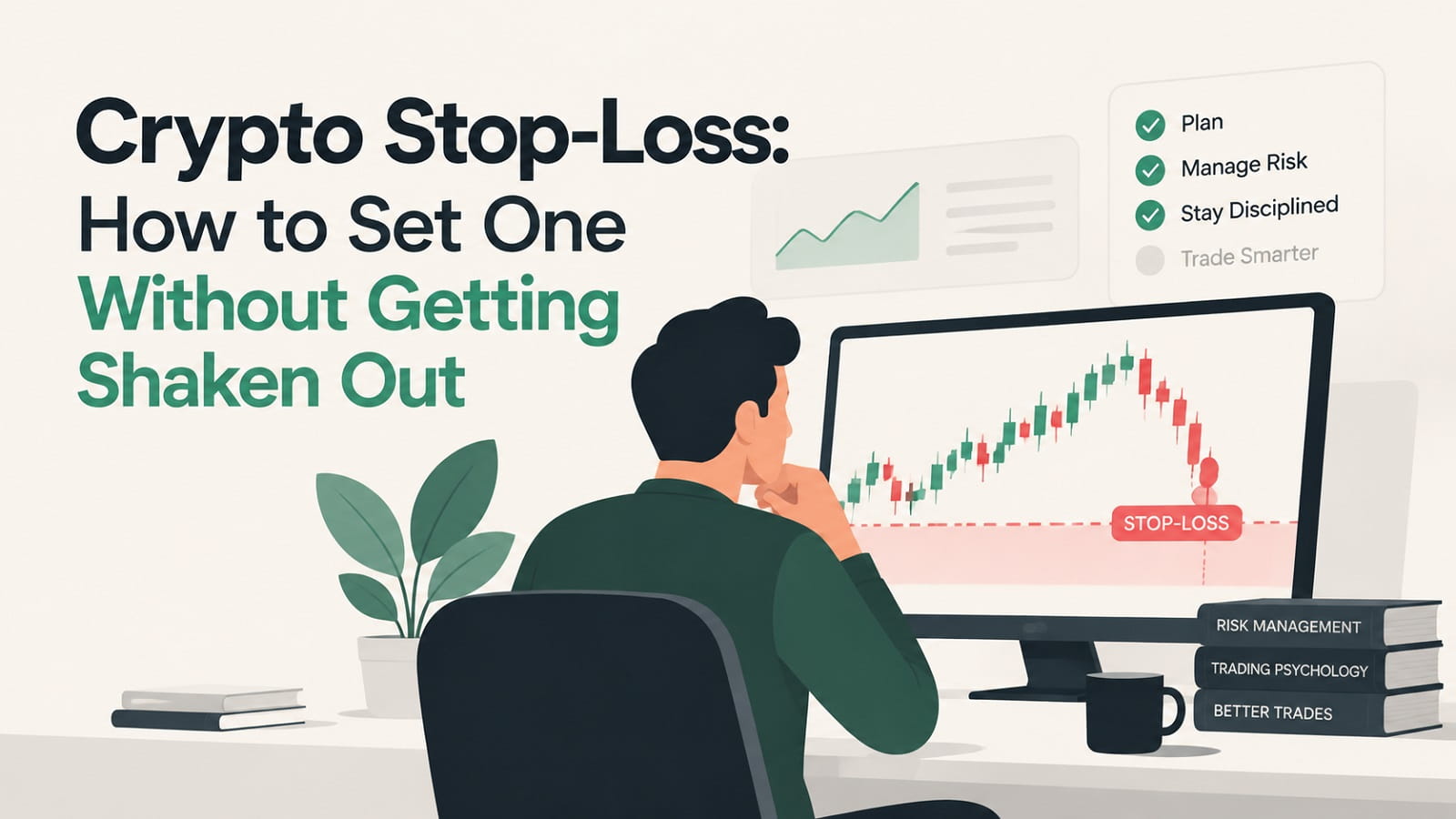
A stop-loss is the mechanical order that closes a position; an invalidation is the point where your idea is wrong. They should line up — you place the stop at or just beyond where the idea is wrong, not at a round percentage that means nothing to the market. Decide it in advance, in calm conditions, and then don’t move it toward hope. The full mechanics of placing and managing one live in Setting a stop-loss →.
Is it worth it? (Risk-to-reward)
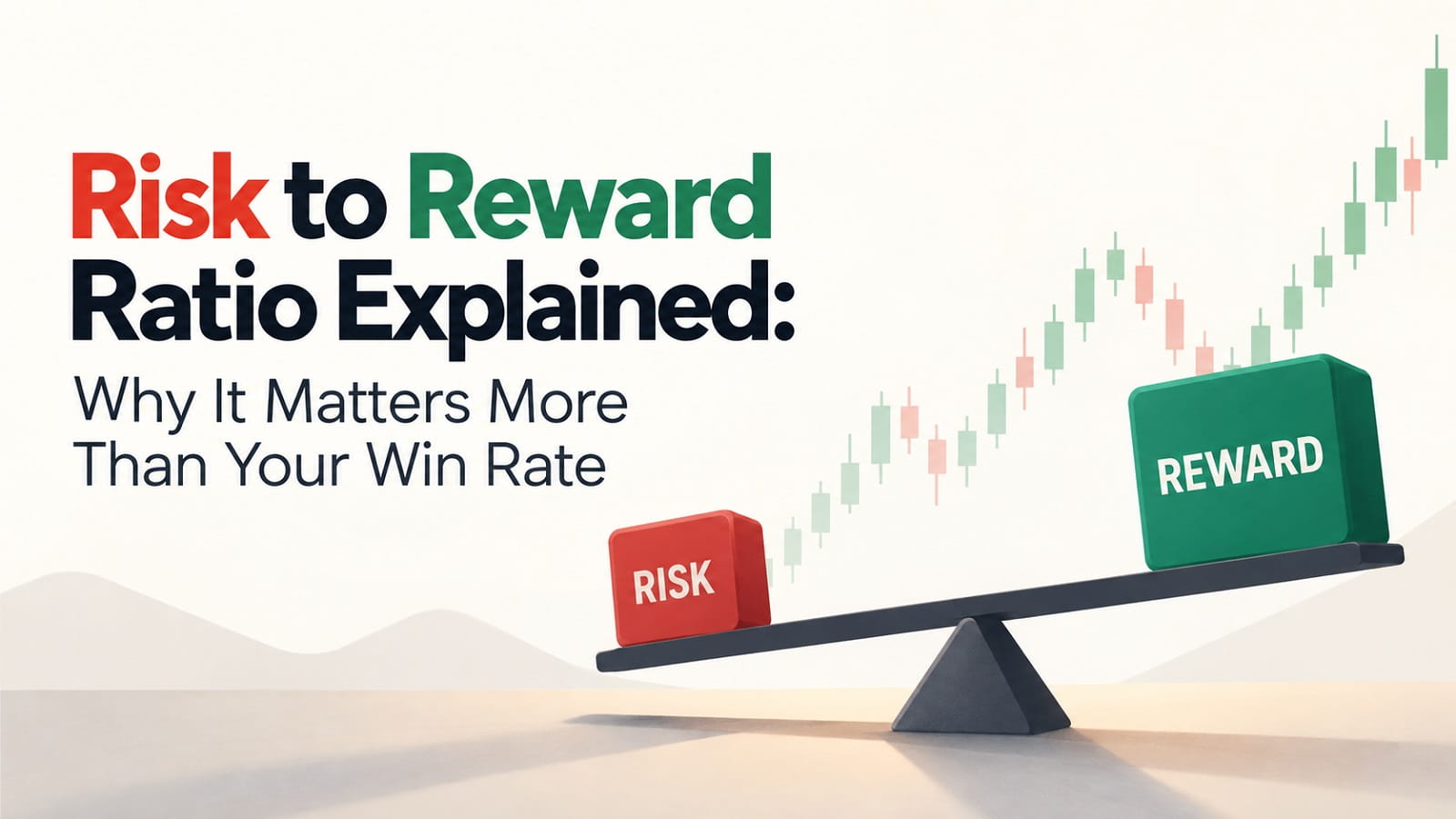
Even a plan with more losers than winners can be profitable, if the winners are large enough relative to the losers. That ratio — what you stand to gain versus what you’re risking — is how you decide whether a setup is even worth taking. A trade that risks a lot to make a little is a bad trade no matter how confident you feel about it. We break the math down simply in Risk-to-reward →.
Will I follow it? (Discipline)
This is the one no formula fixes. You can size correctly, set a clean stop and find great risk-to-reward — and then move the stop, double down, or enter early because a live market makes calm plans feel wrong. Discipline is the practice of doing what your prepared self decided, especially when your in-the-moment self objects. It’s more about habits and honesty than about charts, and it’s what Trading discipline → is about.
Risk isn’t the enemy of returns
A common misread is that focusing on risk means playing small and missing out. The opposite is true. Managing risk well is exactly what lets you stay aggressive when a genuinely good setup appears, because you’ve protected the capital to act on it — and it’s what how Pineva thinks about scenarios feeds directly into: a scenario tells you where your idea breaks, and risk management decides what that costs. The two halves are one decision.
How this shows up in Pineva
Risk in Pineva isn’t a calculator bolted on at the end. In the futures workspace, the invalidation, the exit and the size sit alongside the scenario itself, so the question “what does being wrong cost me?” is answered before you ever commit. Pineva won’t place the trade or promise it works — it makes sure the four questions are answered while you’re still calm enough to answer them honestly.
You can start free and plan the risk on your first setup in a few minutes.
The thread that ties it together
Size so no single loss can hurt you. Exit where your idea is wrong, not where it hurts. Take trades only when the reward justifies the risk. And then — the hard part — actually do all of that when it counts. Returns will come and go with the market. Discipline is the part that’s yours to keep, and it’s the reason some traders are still here to see the good years arrive.
For research and education. Not financial advice. Crypto trading involves risk.